
strength training & longevity
Many people believe that getting older comes with an expiration date on strength. We are often told that once we hit a certain age, weakness and decline are inevitable parts of the package. But what if that narrative is wrong? Building muscle after 65 is not only possible; it is one of the most powerful tools you have to support your balance, maintain your independence, and live life on your own terms.
This guide is about rewriting the story of aging. It is about understanding that your age is simply a number, while your habits tell the real story of your health. Whether you are 65 or 85, you can get stronger. Healthy aging is achievable when daily choices support movement, consistency, and resilience. Let’s explore how you can unlock your body’s potential.
your habits, Not your Age, define your Aging process
We often blame the passage of time for things like feeling weak, moving more slowly, or having less energy. In reality, these are often the result of our habits, not just our age.
Inactivity, poor recovery, and chronic stress can gradually chip away at our strength over the years. The good news is that these are all factors within your control.
Think of it this way: your age is just the number of years you have lived. Your habits, on the other hand, reflect how you care for your body every day. A fit 70-year-old is not just lucky; they have likely spent years prioritizing active living and mindful health choices. You can learn about my philosophy on my About Page. Conversely, a 30-year-old struggling with mobility is not failing at aging. They often experience the long-term effects of choices that favour convenience over self-care.
When we stop challenging our bodies, they stop adapting. But the reverse is also true. When you prioritize consistent movement and proper recovery, your body responds, no matter how many candles were on your last birthday cake.
consistency trumps intensity every time
If aging itself is not the primary barrier, what is? The key to building and maintaining muscle lies in one simple word: consistency.
Health and strength are not built on short bursts of motivation or extreme efforts. They are forged in the small, sustainable choices we make daily. We often think of fitness as a gruelling one-hour gym session, but the other 23 hours of your day play a much larger role. How you sleep, what you eat, and how you manage stress are just as crucial as your workout routine.
This is where many people get it wrong. They push themselves too hard, get injured or discouraged, and then stop altogether. A more effective approach is to focus on what you can do consistently, week after week. For example, it is better to complete two moderate strength workouts every week than to do five intense ones for a month and then burn out. Staying strong as you age is not about doing more; it is about staying consistent.
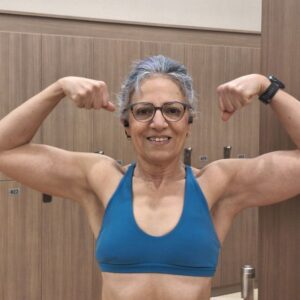
How Building Muscle after 65 Works safely and effectively
Building muscle is a holistic process that involves more than just lifting weights. Your lifestyle creates the foundation for strength, including everything from your diet to your sleep schedule. When these elements work together, age-related muscle loss is no longer an inevitability. Instead, it becomes something you can directly influence and control.
Strength Training: The Foundation of Muscle
Resistance training is essential for signalling your muscles to grow stronger. You do not need to become a bodybuilder. The goal is to challenge your muscles safely and learn how progressive overload helps build muscle effectively at any age.
- Start Small: Begin with two or three strength-training sessions per week, lasting 20-30 minutes each. Focus on major muscle groups: legs, back, chest, shoulders, and arms.
- Focus on Form: Proper technique is more important than lifting heavy weight. Consider working with a qualified trainer, even for a few sessions, to learn correct form for exercises like squats, lunges, push-ups (or wall push-ups), and rows.
- Progressive Overload: To build muscle, you need to challenge it. This does not always mean adding more weight. You can also add more repetitions, an extra set, or reduce rest time between sets. Listen to your body and progress gradually.
Nutrition: The Fuel for Growth
Your muscles need the right fuel to repair and grow. As we age, our protein needs often increase to support muscle maintenance and synthesis. Research from McMaster University highlights the importance of protein for older adults.
- Prioritize Protein: Aim to include a source of protein with every meal. Good sources include lean meats, poultry, fish, eggs, dairy, legumes, and tofu. Spreading your protein intake throughout the day is more effective than consuming it all at once.
- Eat a Balanced Diet: Your body also needs carbohydrates for energy and healthy fats for overall function. Focus on whole foods like fruits, vegetables, whole grains, and nuts.
- Stay Hydrated: Water is critical for muscle function and recovery. Drink plenty of fluids throughout the day, especially around your workouts.
Recovery: The Secret to Results
Recovery is when your muscles actually repair and grow stronger. Neglecting it is a common mistake that can lead to injury and burnout.
- Prioritize Sleep: Aim for 7-9 hours of quality sleep per night. During deep sleep, your body releases growth hormone, which is vital for muscle repair.
- Manage Stress: Chronic stress elevates cortisol, a hormone that can break down muscle tissue. Incorporate stress-reducing activities into your routine, such as walking, meditation, reading, or spending time in nature.
- Listen to Your Body: It is okay to take an extra rest day when you feel tired or sore. Overtraining can be counterproductive. Strength is built over months and years, not days.
Your Strongest Years Are Still Ahead
Your age does not define what your body can achieve.The journey of building muscle after 65 is about how you move, nourish, and care for yourself in a sustainable way. Strength may evolve, but it never loses its value. By challenging outdated stereotypes and focusing on long-term habits, you can maintain your strength and confidence for years to come.
The next decade does not have to be about decline. It can be a time of growth, resilience, and newfound capability.
The next decade does not have to be about decline. It can be a time of growth, resilience, and newfound capability.
Your Next Steps
Ready to start? Here is how to begin your journey.
- Start Small: Commit to two strength-training sessions this week. This could be at home with resistance bands or at a local gym.
- Focus on Recovery: Make a conscious effort to improve one aspect of your recovery, whether it is getting to bed 30 minutes earlier or adding a daily walk to de-stress.
- Stay Consistent: Remember, it is the small, daily habits that create the most significant and lasting change.
Let us shatter the myth of inevitable decline together. Your journey to a stronger you starts now. If you’re interested in about how you move, nourish, and care for yourself in a sustainable way. Strength may evolve, but it never loses its value. By challenging outdated stereotypes and focusing on long-term habits, you can maintain your strength and confidence for years to come.
The next decade does not have to be about decline. It can be a time of growth, resilience, and newfound capability.structured guidance, explore my “safe strength after 50“Safe Strength After 50” for more ideas.